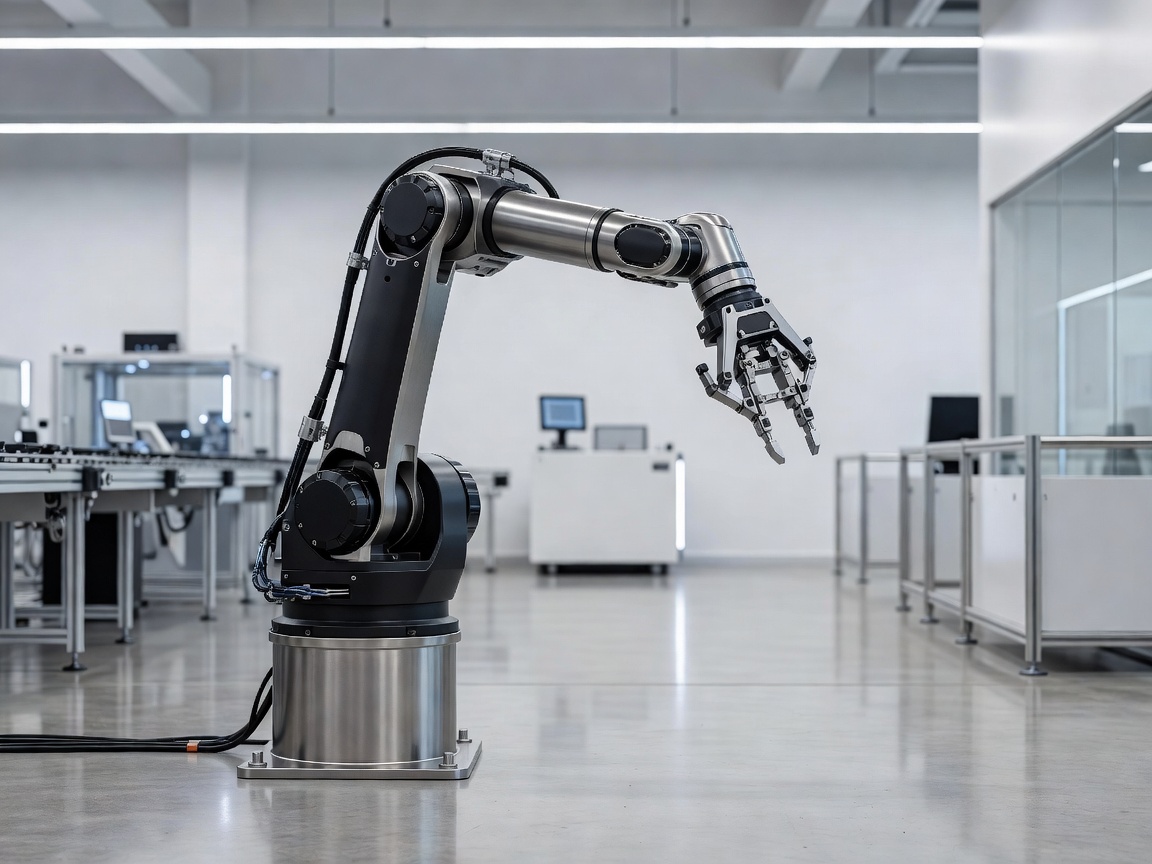
Robotics is not one capability but a stack: mechanical design, sensing, control, planning, safety and integration. Factory automation may repeat a tightly specified motion at a known station. A mobile service robot must navigate shared space. A farm system encounters changing light, weather and crops. The setting determines how much autonomy is useful and how much uncertainty the system must absorb.
Perception, planning and manipulation
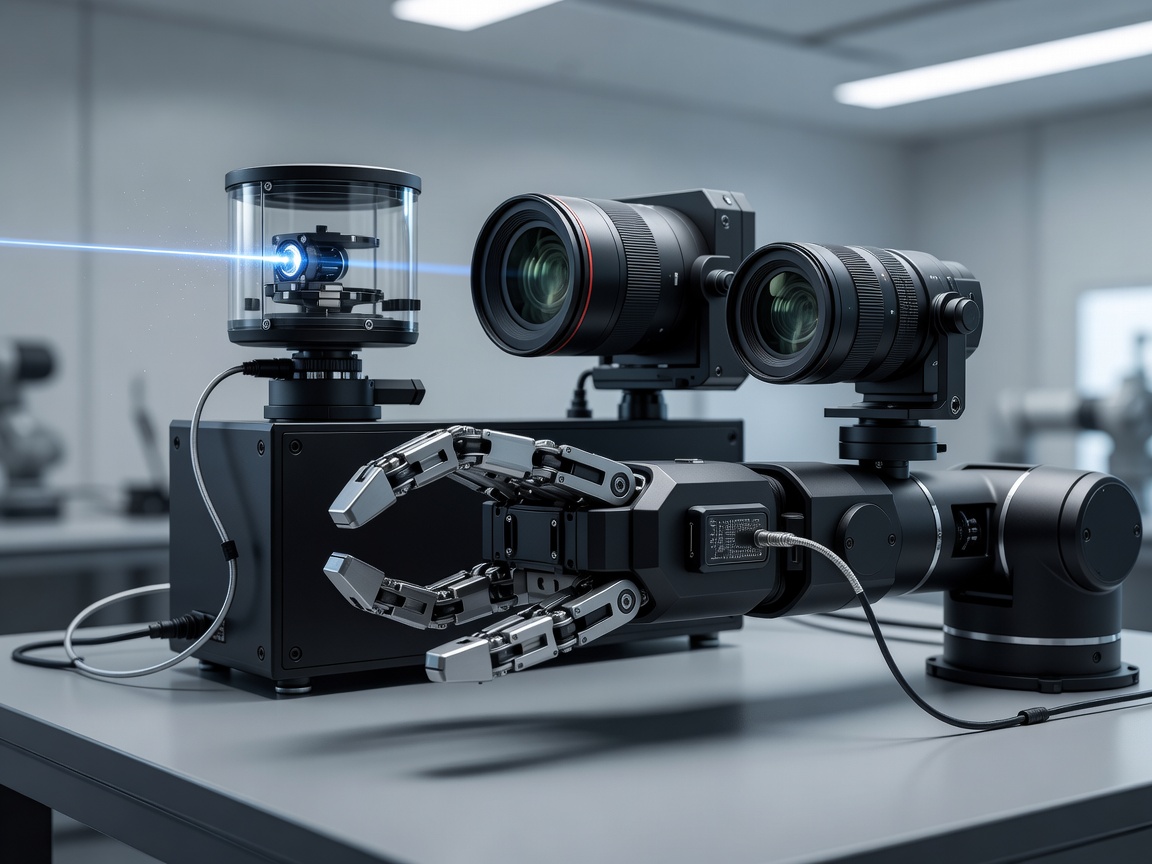
Robot perception uses sensors to estimate the state of the world. Cameras, lidar, radar, force sensors and encoders each provide different information, with different costs and limitations. Sensor fusion combines signals to build a more robust estimate, but data can still be incomplete, delayed or misleading. Computer vision can identify objects or features, while localisation and mapping help a mobile robot understand where it is relative to its environment.
Planning turns a goal into a sequence of possible movements or actions. Control systems then use feedback to keep motion aligned with the intended path. Manipulation is especially demanding: an arm must locate an object, approach it, grasp it without slipping or damaging it, and place it in the right position. Changes in shape, surface, weight and orientation make apparently simple pick-and-place tasks difficult to generalise.
Different environments, different robots
Industrial robot suppliers such as ABB, FANUC and KUKA offer systems used in manufacturing settings, where tasks can be engineered around defined work cells. Collaborative robot designs are intended to support closer human work under specified safety conditions; the label does not remove the need for risk assessment, integration and safeguards. Industrial automation can be highly productive when objects, tooling and process timing are controlled.
Warehouse automation spans conveyors, autonomous mobile robots, storage systems and software that coordinates inventory and movement. Amazon Robotics is one identifiable example of a company deploying warehouse automation; capabilities vary by system and site. Mobile robots rely on navigation, obstacle detection and fleet coordination, and their deployment has to account for people, changing layouts and congested routes.
Agricultural automation faces outdoor variability. Research and commercial work explores machine vision and robotic platforms for activities such as monitoring, weeding and harvesting. A system that works for one crop, row spacing or weather condition may need significant adaptation elsewhere. In service environments, human-machine interaction becomes central: people need predictable movement, clear status signals and safe ways to intervene.
Autonomy is a boundary, not a slogan
Autonomous navigation does not mean a machine operates without constraints. A robot may make its own local movement choices inside a mapped area while relying on human oversight for exceptions. Designers need defined operating conditions, fail-safe behaviour and a recovery procedure for blocked paths, sensor faults or uncertain object identification. A manual stop and an understandable hand-off remain important features.
Practical strengths and limitations
Robots are valuable when a process is repetitive, physically demanding, hazardous or difficult to staff consistently, and when the environment can be made compatible with automation. They can also improve repeatability in carefully controlled tasks. But capital expenditure, integration work, maintenance, safety engineering and staff training are material parts of the decision. A robot may shift labour toward monitoring, exception handling and upkeep rather than eliminate it.
- Define the task and acceptable failure modes before selecting equipment.
- Assess how much variation the system can handle without human help.
- Plan safe separation, emergency stops and recovery workflows.
- Include network, compute, maintenance and integration needs.
- Evaluate workers’ interaction with the system and the effects on work design.
Choose automation around the process, not a headline capability. The computing architecture for perception and planning is discussed in advanced computing, while the sensors and interaction surfaces connecting people to machines are explored in next-generation devices.