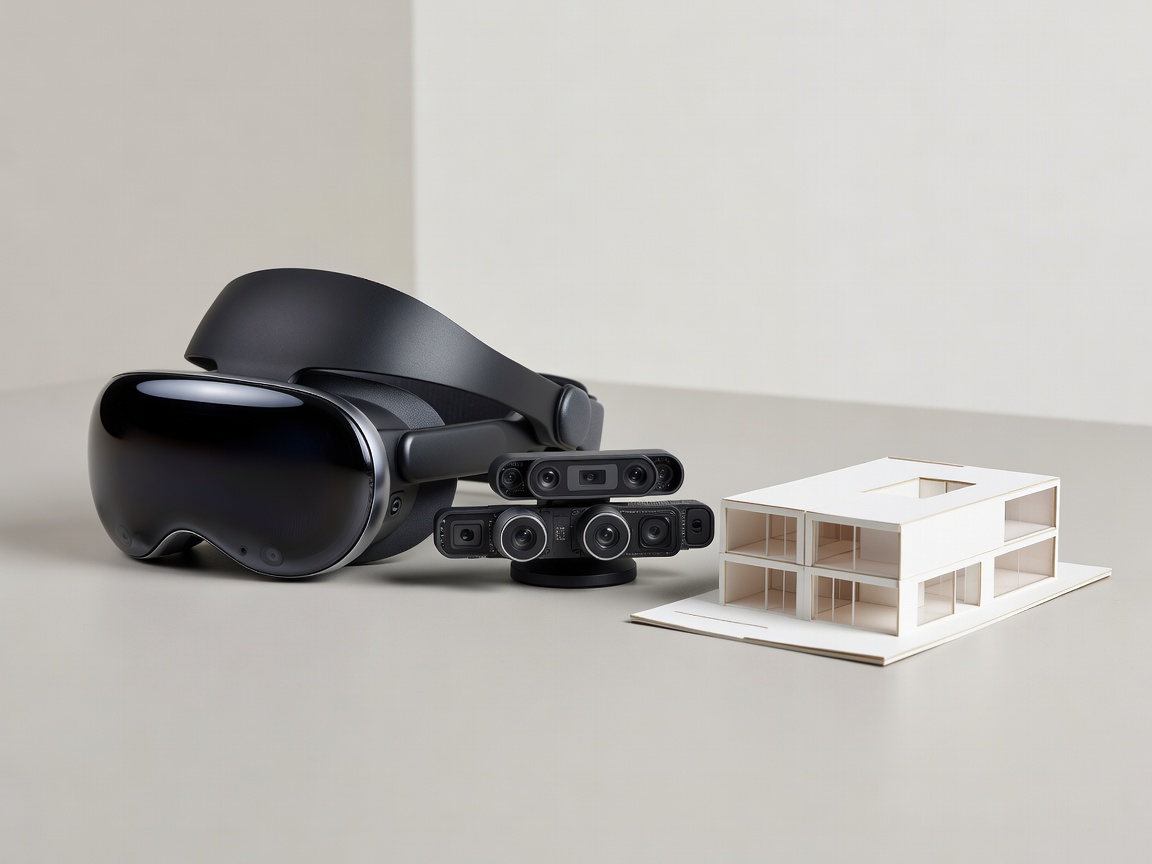
Spatial technology covers several related but distinct experiences. Virtual reality (VR) places a user inside a rendered environment; augmented reality (AR) adds digital elements to a view of the physical world; mixed reality (MR) aims for digital objects that respond to a user’s surroundings. The boundaries are not always used consistently, so it is more useful to inspect the underlying display, tracking and interaction model than rely on labels.
How spatial systems understand a room
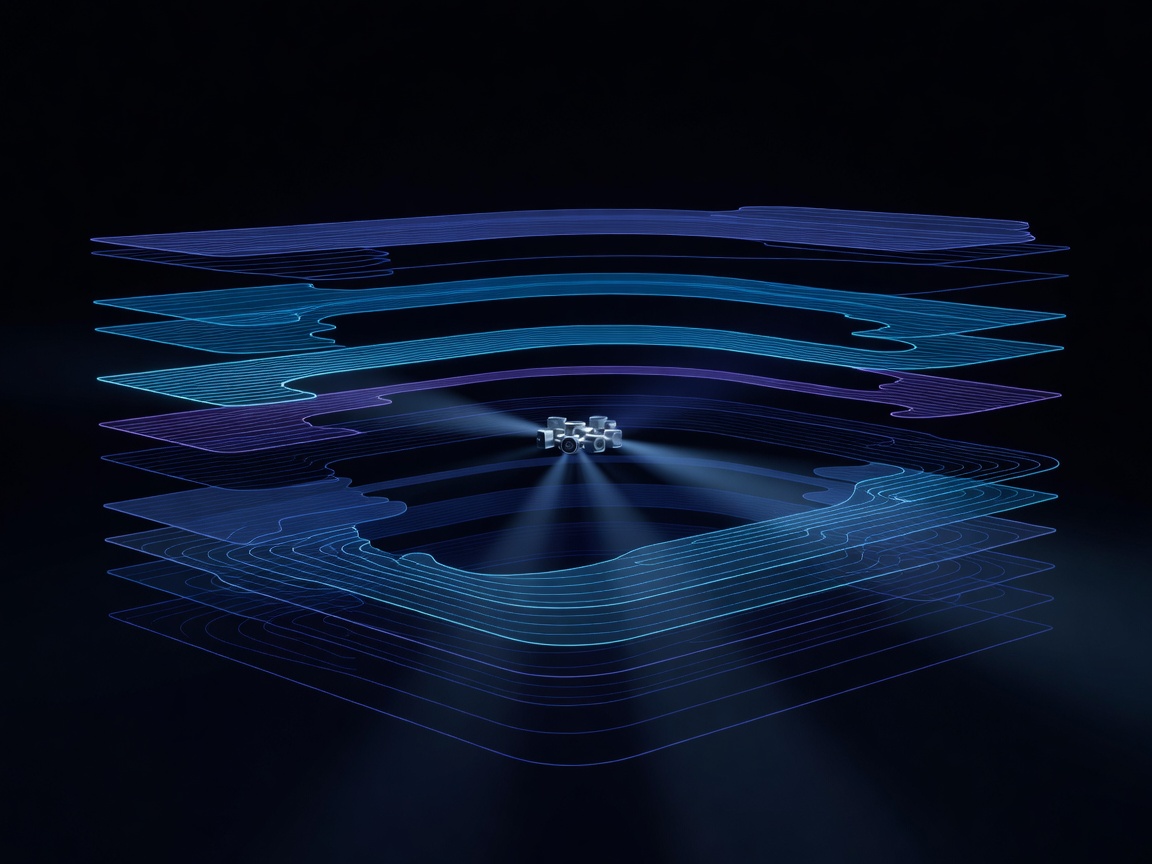
A headset or mobile device combines cameras, inertial measurement units and other sensors to estimate its movement and orientation. Visual-inertial tracking can use camera imagery alongside accelerometer and gyroscope readings; depth sensing can help estimate surfaces and distance. Software maps the environment, maintains a coordinate frame and renders content in a way that should remain aligned as the wearer moves.
That alignment is technically demanding. Low latency matters because a mismatch between movement and image response can undermine comfort. Lighting, reflective surfaces, occlusion, sensor placement and movement speed can all affect tracking. Passthrough systems use cameras to show a view of the surroundings, but they are still mediated by sensors and displays rather than equivalent to direct vision.
Displays, interaction and platforms
Display design involves field of view, resolution, brightness, optical clarity, weight and power. Optical see-through AR and video passthrough approaches present different engineering and user-experience trade-offs. Hand tracking, controllers, eye tracking and voice input each suit different tasks and accessibility needs; combining modalities can help, but too many competing controls can make an interface less clear.
Platform choices matter. Apple’s visionOS and Microsoft’s HoloLens platform are identifiable examples of spatial-computing environments, while Meta’s Quest platform is associated with VR and mixed-reality experiences. Product capabilities and availability change over time, so platform selection should be based on the task, software support, comfort, device management and privacy requirements rather than a static feature list.
Connected devices and smart environments
A connected environment may combine lighting, sensors, cameras, speakers, appliances and local hubs. Standards such as Matter aim to improve interoperability among supported smart-home products, with Thread providing a low-power mesh networking option used in some connected-device systems. Compatibility still depends on device roles, controller support and the features each manufacturer implements.
Location-aware systems can use satellite positioning, Wi-Fi, Bluetooth beacons, ultra-wideband or a combination of signals. Their accuracy and availability depend on the environment and implementation. Indoor positioning is not a simple extension of outdoor navigation: buildings interfere with signals, rooms change, and precise location can expose sensitive patterns of behaviour.
Where the practical trade-offs appear
Spatial interfaces can be valuable for visualisation, training, design review, remote assistance and experiences where hands-free, context-aware information genuinely helps. They are less compelling when the same work is easier on a screen, when users need long sessions without a wearable, or when the content does not justify the setup. Comfort, battery life, prescription eyewear support, hygiene and social acceptability are not secondary details; they shape whether a system is used.
- Match the platform to a specific task and intended session length.
- Check tracking conditions, network dependence and fallback behaviour.
- Review app availability, data handling and device-management options.
- Consider comfort, accessibility and shared-space etiquette.
- For connected homes, plan for interoperability and service changes.
Connected interfaces are strongest when the digital layer is useful, legible and easy to control. For hardware and sensor constraints, visit next-generation devices; the software patterns behind new interaction models are covered in future software.